31 Days of “Little Known” FACTS — For Breast Cancer Awareness Month — Day 17 — Radical Remission

Did you know…

Over 1500 cases of “radical remission” have been analyzed and documented by Dr. Kelly Turner, author of New York Times bestseller, Radical Remission: Surviving Cancer Against All Odds.

“Radical remission” is a term that refers to remission that occurs either without conventional medical treatment, after conventional treatment has failed to work, or when conventional and complementary methods are used in conjunction to overcome a dire prognosis.

Hear the story behind the book:

What is the Radical Remission Project?

The Radical Remission Project was born out of Dr. Kelly Turner, PhD’s dissertation research on Radical Remission (RR). As Dr. Turner began to research RR as part of her PhD from the University of California at Berkeley, she realized that the opinions of two groups of people were typically missing from the 1,000+ cases of RR published in medical journals – 1) the survivors themselves, and 2) alternative healers. Because Western doctors do not currently have an explanation for why RR’s occur, Dr. Turner decided to ask these two ignored groups what they think can lead to a Radical Remission. Her dissertation research involved a year-long trip around the world during which she traveled to 10 different countries in order to interview 20 Radical Remission survivors and 50 alternative healers about their techniques for healing cancer. Since then, her research has continued, and Dr. Turner has now analyzed over 1,500 cases of Radical Remission.

Find Radical remission stories or share your story

Posted in Health, Options, Personal Stories, Research, Resources, Support | Tagged , , , , , , , , , , | 1 Comment

31 Days of “Little Known” FACTS — For Breast Cancer Awareness Month — Day 16 — Dairy May Increase Breast Cancer Mortality Risk

Did you know…

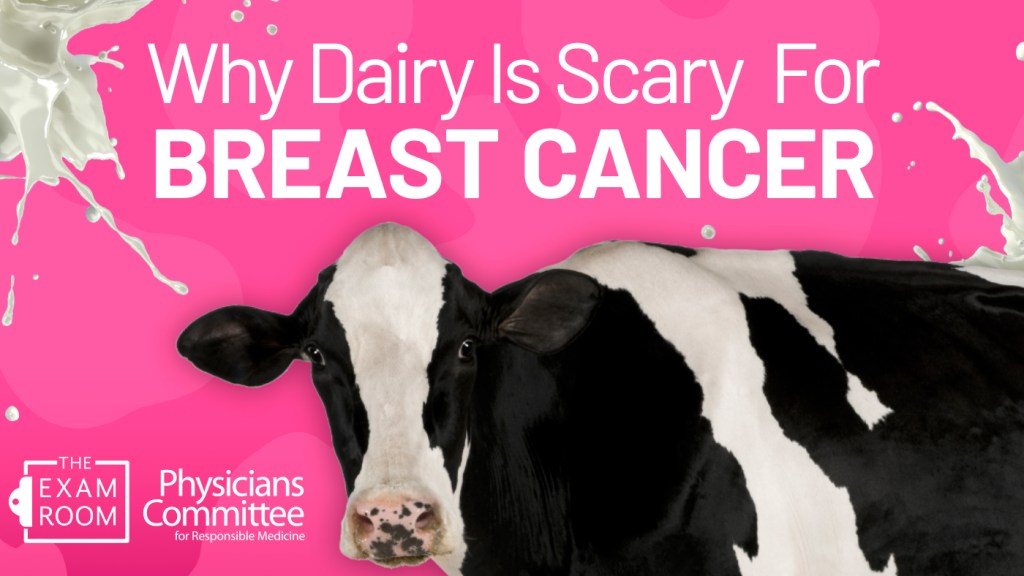
Studies have linked dairy products to an increased risk of breast cancer mortality.

“Dairy cheese contains reproductive hormones that may increase breast cancer mortality risk.”

That’s the warning label the Physicians Committee for Responsible Medicine—a nonprofit with more than 12,000 doctor members—is petitioning the Food and Drug Administration to require cheese manufacturers to prominently display on all dairy cheese products. See petition at PCRM.

“It doesn’t matter if it is organic, grass-fed or not fed with hormones. When we’re consuming dairy, we’re getting estrogen and other sex steroids.” – Oncology dietitian Alison Tierney, RD

Listen to Alison on The Exam Room™ podcast and hear why the hormones, fat, and proteins found in milk can be triggers for cancer.

Physician’s Committee for responsible Medicine states: “Eating a low-fat diet rich in fruits, vegetables, grains, and beans—while avoiding meat and fatty animal products—promotes breast health.” – Fight Breast Cancer with a Plant-based Diet

The collected data from other researchers and our own data are indicating that the presence of steroid hormones in dairy products could be counted as an important risk factor for various cancers in humans. – Hormones in Dairy Foods and Their Impact on Public Health – A Narrative Review Article

Posted in Health, Options, Research, Resources | Tagged , , , , , , , , | Leave a comment

31 Days of “Little Known” FACTS — For Breast Cancer Awareness Month — Day 15 — Toxic “Forever Chemicals” in Pink Post-It Notes May Increase Breast Cancer Risk

Did you know…

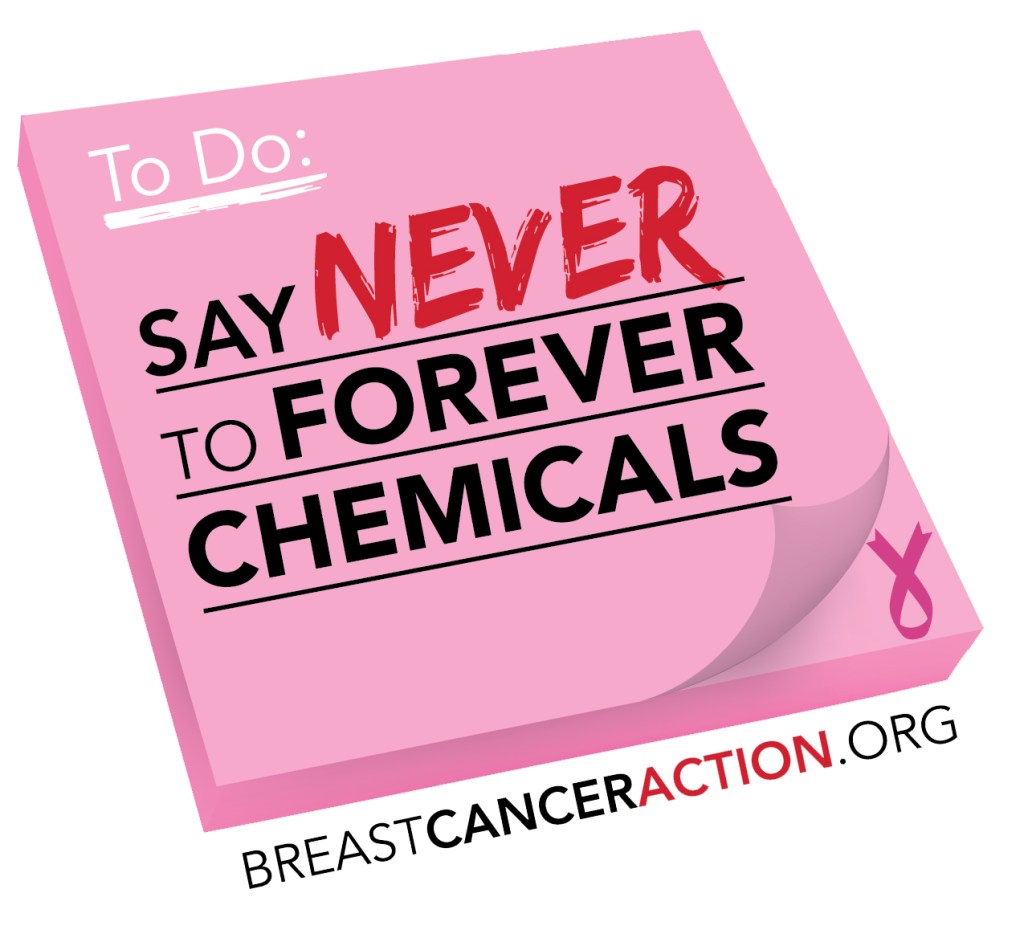
PFAS are called “forever chemicals” because they don’t break down, and evidence shows that even very low levels of PFAS exposure is not safe for human health.

Please consider joining Breast Cancer Action in their campaign to call out corporate giant 3M for pinkwashing while continuing to produce and use toxic PFAS. 3M says their pink products are a “reminder of a good cause” even though their toxic “forever chemicals” may increase the risk of breast cancer. This hypocrisy is called pinkwashing.

Read Kara Kenan’s story. She was exposed to toxic PFAS for much of her life and diagnosed with breast cancer at age 35.

Please consider this easy way to take action — Tell 3M to stop producing, using, and selling PFAS!

Thank you Breast Cancer Action for making a difference with your mission, vision and values

Posted in Health, Personal Stories, Research | Tagged , , , , , , , | Leave a comment

31 Days of “Little Known” FACTS — For Breast Cancer Awareness Month — Day 14 — Some Doctors are Paid $$$ for Persuading Women to Get Screening Mammograms

Did you know…

Some doctors are given cash bonuses for persuading women to get screening mammograms.

One ethical doctor published a paper in the British Medical Journal, April 3, 2019:

Helen Salisbury: Should I persuade patients to have mammograms?

“Our practice has recently been invited by the local clinical commissioning group to take part in a quality improvement scheme aimed at increasing the uptake of cancer screening. We are offered support from Cancer Research UK to make an action plan to improve rates of bowel, cervical, and breast cancer screening. We’re incentivised with payments for engaging in the process and for any increase in the proportion of our patients screened.”

Response from Michael Baum, Prof emeritus of surgery:

“Dr. Salisbury is to be congratulated on her honesty. No GP should be put in this position of being rewarded for meeting targets of compliance with screening, whilst denying the patient the right of informed choice. The NHSBSP management must shoulder this responsibility by setting out the pros and cons of screening for breast cancer without making any covert coercion. As chance would have it I’m off to Lugano in two weeks to be interviewed on Swiss TV in a programme that celebrates the de-implementation of screening by mammography in Switzerland.”

More insightful responses:

“Helen Salisbury is quite right. We do not know if the benefits of screening mammography exceed the harms. The problem is though that to the public the “catch it early” slogan is divine truth. The public does not know what “it” and “early” are. “It” may be a harmless in-situ carcinoma or benign microcalcification, and “early” may be a small tumour that has metastasized widely. Fortunes are being wasted on screening and many lives are being devastated.” – Re: Helen Salisbury: Should I persuade patients to have mammograms? The “catch it early” myth, Roger H Armour, Retired consultant surgeon

“Back in 2012, despite increasing evidence of breast screening harms and lack of benefit, GPs were being paid to encourage women to participate in the programme as part of ‘local enhanced services payments’ if a health authority deemed recruitment was getting too low. Such payments were not ethical then; in light of today’s knowledge, are they not destined to invite litigation?” – Mitzi A J Blennerhassett, medical writer/author, bmj patient reviewer

“The short answer to the title question is “No! Definitely not.”

A trusted doctor should be one who guides his/her patient to reliable information and encourages them to contribute to a well-considered shared, but individual decision that respects BOTH party`s rights to self-determination according to their own values, individual circumstances and preferences. No interference of State!

The limited consultation time is short enough anyway: it should not be used by the doctor to promote public health issues: a reversal of a true doctor-patient relationship. His/her patient will have taken the initiative to make the appointment and should be free to raise those issues which concern them, without imposition of public health promotion. Especially where the conscience of the doctor is troubled, both by being offered a payment to raise a Public Health Authority issue that is directed at citizens, not patients, and especially when they are uncertain of the value of the intervention – in this case the harm benefit ratio of breast screening? The power of Public Health to blackmail by payment incentive and override the judgement of individual doctors is insidiously corrupting the Profession, crushing its judgement and professionalism, as Seamus O`Mahony has so eloquently written about. Overdiagnosis with resultant wastage of resources stem from this reversal; a sad consequence of this uncalled for activity.” – Hazel Thornton, Honorary Visiting Fellow, Department of Health Sciences, University of Leicester

Thank you Dr. Salsbury and all who wrote responses.

For more responses to Dr. Helen Salsbury’s BMJ article, see rapid responses

Posted in Health, Options, Research, Sanity | Tagged , , , , , , , , , , , , , , , , | 1 Comment

31 Days of “Little Known” FACTS — For Breast Cancer Awareness Month — Day 13 — Autopsy Studies Find High % of DCIS

Did you know…

A review of autopsy records showed that somewhere between 9% and 15% of women have undetected DCIS at death (Welch, 1997). This supports the idea that a proportion of DCIS occurrences will not progress into invasive cancer or become life-threatening. National Breast Cancer Coalition

Conclusion: “Our systematic review in ten countries over six decades found that incidental detection of cancer in situ and breast cancer precursors is common in women not known to have breast disease during life. The large prevalence pool of undetected cancer in-situ and atypical hyperplasia in these autopsy studies suggests screening programs should be cautious about introducing more sensitive tests that may increase detection of these lesions. – Prevalence of incidental breast cancer and precursor lesions in autopsy studies: a systematic review and meta-analysis

Autopsy studies concluded: A substantial reservoir of DCIS is undetected during life. How hard pathologists look for the disease and, perhaps, their threshold for making the diagnosis are potentially important factors in determining how many cases of DCIS are diagnosed. – Using Autopsy Series To Estimate the Disease “Reservoir” for Ductal Carcinoma in Situ of the Breast: How Much More Breast Cancer Can We Find?

“Autopsy studies have examined the breast tissue of women who had never been diagnosed with breast cancer and found that many cases of DCIS had gone undetected. At least some of the lesions may go away on their own, though it’s not clear how or even whether that happens.” – No Easy Answers

The majority of DCIS lesions found are detected by screening, as many DCIS lesions do not come with symptoms, but do contain calcifications that can be seen upon mammography. Obviously, DCIS lesions may be occult by mammography or the diameter of the area containing calcifications underestimates the extent of DCIS [25], [26]. This is also illustrated by the much higher prevalence of DCIS (7–39%) found in autopsy studies concerning the age group for which population-based screening programs are in place, whereas in screening and clinical practice (INVASIVE) breast cancer was diagnosed in only 1% of women within a similar age range [21], [27]. – Finding the balance between over- and under-treatment of ductal carcinoma in situ (DCIS)

Posted in Options, Research | Tagged , , , , , , , , | Leave a comment

31 Days of “Little Known” FACTS — For Breast Cancer Awareness Month — Day 12 — Switzerland Review Board Recommended Abolishing Mammography Screening

Did you know…

Switzerland was advised to Phase Out Mammography Screening

The Swiss Medical Board released a report of its findings in 2014 and concluded:

  1. no new systematic screening mammography programs should be introduced,
  2. all forms of mammography screening must be evaluated for quality,
  3. women must be given clear and balanced information on the benefits and harms of screening,
  4. systematic mammography screening programs in Switzerland–due to the tool’s limited utility for reducing mortality and the increased likelihood of harm from overdiagnosis and overtreatment—should be phased out.

Weighed against the slight benefit of repeated screening were the harms of increased biopsies and the overdiagnosis of breast cancers that would never have produced symptoms in a person’s lifetime or become clinically relevant. Overdiagnosis can increase the impact of cancer on quality of life and longevity because it leads to overtreatment, exposing patients to potential harms without offering any benefits. – Abolishing Mammography Screening Programs? A View from the Swiss Medical Board, Gayle Sulik PhD, April 30th, 2014

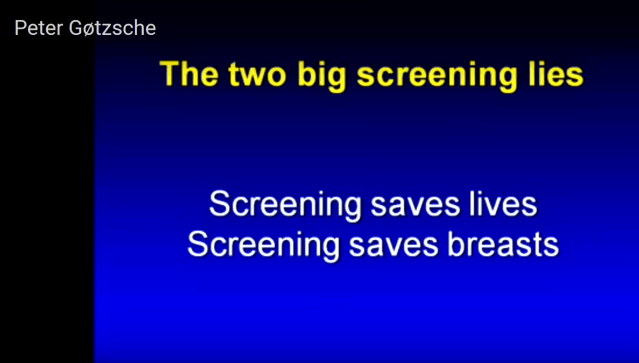
Listen to Peter Gotzsche explain why “Screening Doesn’t Save Lives.” He states: “Stay Away from Screening” as it harms many women with overdiagnosis and overtreatment. and it increases breast cancer incidence and aggressive treatments.

Mammography screening is harmful and should be abandoned

More studies and experts speaking out against mammography screening: The Downside of Mammograms – What Your Doctor May Not Be Telling You

Posted in Health, Options, Research | Tagged , , , , , , , , , | Leave a comment

31 Days of “Little Known” FACTS — For Breast Cancer Awareness Month — Day 11 — It’s Ok to Opt Out of Mammograms

Did you know…

It’s Ok to Opt Out of Mammograms.

In this must-read article, science writer, Christie Aschwanden lists key points (see below) of some of the “little known” harms of screening. She encourages women to review a chart on “Benefits and Harms of Screening Mammography.

Key points from article:

  • Here’s the bigger problem: screening mammography has failed to reduce the incidence of metastatic disease and it’s created an epidemic of a precancer called DCIS. The premise of screening is that it can find cancers destined to metastasize when they’re at an early stage so that they can be treated before they turn deadly. If this were the case, then finding and treating cancers at an early stage should reduce the rate at which cancers present at a later, metastatic stage. Unfortunately, that’s not what’s happened.”
  • If you find a lump or something weird in your breast, absolutely get it checked out. In those instances, a mammogram is a necessary diagnostic tool. But screening mammograms — those done when you have no symptoms — have never been shown to decrease overall mortality and may cause tangible harms. For these reasons, I’ve chosen to opt out of mammography, and I based my decision on statistics and science.

Be sure to read the entire article and review the chart: It’s Ok to Opt Out of Mammograms

For anyone interested in a better, safer, more accurate way of imaging dense breast tissue, read my blog post: Bye-Bye Mammograms: Hello SonoCiné Ultrasound

Thank you thank you thank you Christie for taking the time (yet again) to write such an important EDUCATIONAL article!

Posted in Health, Options, Personal Stories, Research, Resources, Sanity, Support | Tagged , , , , , , , , , , , , , , , , , , , | 1 Comment

31 Days of “Little Known” FACTS — For Breast Cancer Awareness Month — Day 10 — UNACCEPTABLE Rates of Failed Surgeries & When to Say “NO MORE”

Did you know…

failThe percentage of women who need a 2nd or 3rd surgery after a lumpectomy, (also called breast conserving surgery (BCS) or partial mastectomy) is alarmingly high — especially for DCIS (stage ZERO breast cancer).  One study showed 48% to 59%.

I wrote The Insanity of DCIS Surgery after a 2nd surgery in Oct 2011.

A “close” margin of low-grade DCIS remained and I was told I needed a mastectomy.   My surgeon actually said:

“Your breast is like spoiled soup. It isn’t worth saving.”

The sad thing is, a great majority of woman in my shoes would have probably signed up right then for a mastectomy — or a double mastectomy (even though this offers NO SURVIVAL BENEFIT).

It’s a scary position to be in — with the highly confusing and alarming risk statistics — and I feel for any woman who has had to make this difficult decision.

But….

My gut told me mastectomy was not right — nor were any of the other “standard of care” treatments. My nonstop research led me to a minority of experts more in alignment with my intuition, values and preferences.

So, despite serious pressures for mastectomy or “at least 3 weeks of radiation” and years of risk-reducing drugs, I said NO to all of it. I never went back to the surgeon — or any doctor — who used fear-based communication.

TIMEI did not “do nothing.”

I shifted my life focus from fear of cancer to intensive study of holistic health as a means of breast cancer risk-reduction. I even got certified as a nutritionist. Active Surveillance P L U S was my “treatment” of choice. P L U S stands for Proactive – Lifestyle – Understanding – Support

I created DCIS 411 to ensure women world-wide would hear there is another “less is more” perspective.

Donna’s Journey and the video below tell my story.  It’s now been 10 years.  Despite the scary statistics told to me, I have had no trace of anything suspicious in my breast — NO DCIS — and NO invasive cancer ever.

Posted in Health, Options, Personal Stories, Research, Sanity, Support | Tagged , , , , , , , , , , , | 5 Comments

31 Days of “Little Known” FACTS — For Breast Cancer Awareness Month — Day 9 — Too Many Unnecessary Biopsies

Did you know…

1.6 million breast biopsies are performed each year in the US, and approximately 80% are found to be benign.

Why so many biopsies? 

Fear of malpractice influences radiologists to order a biopsy of “anything and everything that shows up on the mammogram.” – The Untold Message of Breast Cancer Awareness Month, by Jeffrey Dach MD

Is there a risk of metastasis?

Puncturing the tumor can result in the release in microscopic quantities of cancer cells into the surrounding lymphatic system of blood vessels. This can allow the cancer cells to move to distant organs and grow. – Hope4Cancer Treatment Centers

Risk of tumor cell seeding through biopsy and aspiration cytology

Is there damage to sensitive breast tissue?

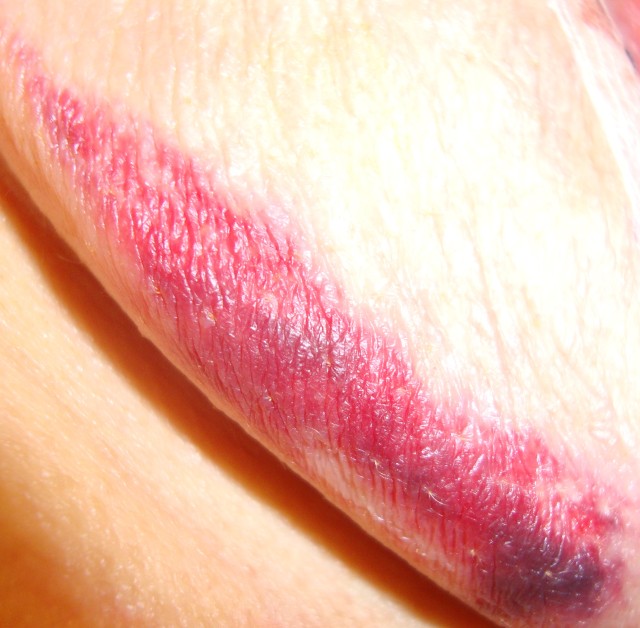
Watch Inside Edition’s investigative report which shows my badly bruised breast from a “guide wire” procedure prior to a surgical biopsy in 2010:

Is Stage Zero Breast Cancer Really Cancer? Women Share Their Doubts

Can a breast biopsy be avoided?

“If it doesn’t look like high-grade DCIS, we should leave it alone. We would eliminate two thirds of all biopsies if we did.” – Dr. Laura Esserman, Take Carcinoma Out of DCIS and Ease Off Treatment.

Marianna Pinto describes how relieved she was to avoid a breast biopsy:

Info about Dr. Kelly and SonoCine Ultrasound

What are other potential issues with breast biopsies?


Posted in Health, Options, Personal Stories, Research, Resources, Sanity | Tagged , , , , , , , , | Leave a comment

31 Days of “Little Known” FACTS — For Breast Cancer Awareness Month — Day 8 — Overdiagnosis Devastates Lives

Did you know…

Overdiagnosis of DCIS Devastates the Lives of Tens of Thousands of Healthy Women Every Year.

In this country, the huge jump in D.C.I.S. diagnoses potentially transforms some 50,000 healthy people a year into “cancer survivors” and contributes to the larger sense that breast cancer is “everywhere,” happening to “everyone.” That, in turn, stokes women’s anxiety about their personal vulnerability, increasing demand for screening — which, inevitably, results in even more diagnoses of D.C.I.S. Meanwhile, D.C.I.S. patients themselves are subject to the pain, mutilation, side effects and psychological trauma of anyone with cancer and may never think of themselves as fully healthy again. Our Feel-Good War on Breast Cancer, NY Times, Peggy Orenstein

According to Dr. Laura Esserman, Director of the Carol Franc Buck Breast Care Center at UCSF stated, “DCIS is not cancer. It’s a risk factor. In Our Feel-Good War on Breast Cancer, Esserman states, “For many DCIS lesions, there is only a 5 percent chance of invasive cancer developing over 10 years. That’s like the average risk of a 62-year-old. We don’t do heart surgery when someone comes in with high cholesterol. What are we doing to these people?

Cancer Research UK states: Overdiagnosis: when finding cancer can do more harm than good

Overdiagnosis, in turn, leads to overtreatment, which is the treatment of clinically insignificant disease, essentially giving too much treatment without benefit to the patient. Treating a cancer that is not life-threatening leads to significant harm for women. Accepting the Swiss Medical Board estimates, that means one in five women who was told she had breast cancer after her mammogram received unnecessary treatment for cancer. The result is that tens of thousands of women in the U.S. each year are treated unnecessarily for breast cancer and undergo surgery, radiation and chemotherapy for tumors that are not and never would be life threatening.How Routine Mammography Screening Leads to Overdiagnosis & Overtreatment, Breast Cancer Action

Research on Psychological Harm of Overdiagnosis

The Marmot Report in 2012 recognised the burden of overtreatment to women’s wellbeing.7 In effect, women with DCIS are labelled as ‘cancer patients’, with concomitant anxiety and negative impact on their lives, despite the fact that most DCIS lesions will probably never progress to invasive breast cancer. Owing to the uncertainty regarding which lesions run the risk of progression to invasive cancer, current risk perceptions are misleading and consequently bias the dialogue between clinicians and women diagnosed with DCIS, resulting in overtreatment for some, and potentially many, women. Ductal carcinoma in situ: to treat or not to treat, that is the question

More Research Concluding Serious Psychological Harm

What To do about Overdiagnosis?

First and foremost, tell the truth: women really do have a choice. While no one can dismiss the possibility that screening may help a tiny number of women, there’s no doubt that it leads many, many more to be treated for breast cancer unnecessarily. Women have to decide for themselves about the benefit and harms. But health care providers can also do better. They can look less hard for tiny cancers and pre-cancers and put more effort into differentiating between consequential and inconsequential cancers. We must redesign screening protocols to reduce overdiagnosis or stop population-wide screening completely. Screening could be targeted instead to those at the highest risk of dying from breast cancer — women with strong family histories or genetic predispositions to the disease. These are the women who are most likely to benefit and least likely to be overdiagnosed.” – Cancer Survivor or Victim of Overdiagnosis? , NY Times, H. Gilbert Welch

Education about Overdiagnosis is Critical

In Britain, where women are screened every three years beginning at 50, the government recently decided to revise its brochure on mammography to include a more thorough discussion of overdiagnosis, something it previously dispatched with in one sentence. That may or may not change anyone’s mind about screening, but at least there is a fuller explanation of the trade-offs. – Our Feel-Good War on Breast Cancer, NY Times, Peggy Orenstein

BeWISE (Women Informed Supported Empowered) is a woman’s health initiative with an urgent public health mission to ensure all women are properly informed about serious potential harms of breast cancer screening.

Conflicts of interest and well-funded marketing campaigns have created an imbalance of information — promoting a one-sided story of “life-saving” benefits of mammography while ignoring or downplaying serious harms.

Inspired by thousands of women’s personal experiences and shocking discoveries following a diagnosis of DCIS, also known as “Stage Zero” Breast Cancer, #BeWISE seeks to spare thousands of women world-wide annually from harm due to being uninformed or misinformed.

#BeWISE utilizes videos and info-graphics to break down real science into simple, no-nonsense chunks.

YouTube University — Experts Explain Overdiagnosis

The internet enables all of us to get educated by experts explaining overdiagnosis!

Professor Michael Baum has been an outspoken expert about the problem of breast cancer screening and overdiagnosis for years. Here is his presentation from Preventing Overdiagnosis 2018

Screening for breast cancer with mammography, Cochrane Database of Systematic Reviews , Peter C Gøtzsche, Karsten Juhl Jørgensen

If we assume that screening reduces breast cancer mortality by 15% and that overdiagnosis and overtreatment is at 30%, it means that for every 2000 women invited for screening throughout 10 years, one will avoid dying of breast cancer and 10 healthy women, who would not have been diagnosed if there had not been screening, will be treated unnecessarily. Furthermore, more than 200 women will experience important psychological distress including anxiety and uncertainty for years because of false positive findings. To help ensure that the women are fully informed before they decide whether or not to attend screening, we have written an evidence‐based leaflet for lay people that is available in several languages on www.cochrane.dk. Because of substantial advances in treatment and greater breast cancer awareness since the trials were carried out, it is likely that the absolute effect of screening today is smaller than in the trials. Recent observational studies show more overdiagnosis than in the trials and very little or no reduction in the incidence of advanced cancers with screening.

Professor Michael Baum presentation 2010

Posted in Health, Options, Research, Resources, Sanity | Tagged , , , , , , , , , , , , , , , , | Leave a comment