31 Days of “Little Known” FACTS — For Breast Cancer Awareness Month — Day 8 — Overdiagnosis Devastates Lives

Did you know…

Overdiagnosis of DCIS Devastates the Lives of Tens of Thousands of Healthy Women Every Year.
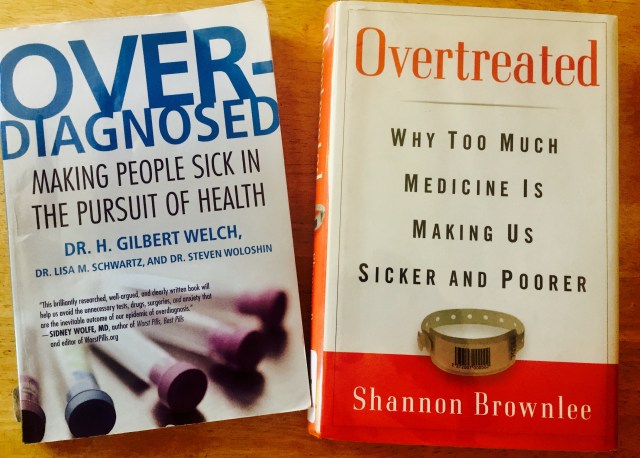
In this country, the huge jump in D.C.I.S. diagnoses potentially transforms some 50,000 healthy people a year into “cancer survivors” and contributes to the larger sense that breast cancer is “everywhere,” happening to “everyone.” That, in turn, stokes women’s anxiety about their personal vulnerability, increasing demand for screening — which, inevitably, results in even more diagnoses of D.C.I.S. Meanwhile, D.C.I.S. patients themselves are subject to the pain, mutilation, side effects and psychological trauma of anyone with cancer and may never think of themselves as fully healthy again. Our Feel-Good War on Breast Cancer, NY Times, Peggy Orenstein

According to Dr. Laura Esserman, Director of the Carol Franc Buck Breast Care Center at UCSF stated, “DCIS is not cancer. It’s a risk factor. In Our Feel-Good War on Breast Cancer, Esserman states, “For many DCIS lesions, there is only a 5 percent chance of invasive cancer developing over 10 years. That’s like the average risk of a 62-year-old. We don’t do heart surgery when someone comes in with high cholesterol. What are we doing to these people?

Cancer Research UK states: Overdiagnosis: when finding cancer can do more harm than good

Overdiagnosis, in turn, leads to overtreatment, which is the treatment of clinically insignificant disease, essentially giving too much treatment without benefit to the patient. Treating a cancer that is not life-threatening leads to significant harm for women. Accepting the Swiss Medical Board estimates, that means one in five women who was told she had breast cancer after her mammogram received unnecessary treatment for cancer. The result is that tens of thousands of women in the U.S. each year are treated unnecessarily for breast cancer and undergo surgery, radiation and chemotherapy for tumors that are not and never would be life threatening.How Routine Mammography Screening Leads to Overdiagnosis & Overtreatment, Breast Cancer Action

Research on Psychological Harm of Overdiagnosis

The Marmot Report in 2012 recognised the burden of overtreatment to women’s wellbeing.7 In effect, women with DCIS are labelled as ‘cancer patients’, with concomitant anxiety and negative impact on their lives, despite the fact that most DCIS lesions will probably never progress to invasive breast cancer. Owing to the uncertainty regarding which lesions run the risk of progression to invasive cancer, current risk perceptions are misleading and consequently bias the dialogue between clinicians and women diagnosed with DCIS, resulting in overtreatment for some, and potentially many, women. Ductal carcinoma in situ: to treat or not to treat, that is the question

More Research Concluding Serious Psychological Harm

What To do about Overdiagnosis?

First and foremost, tell the truth: women really do have a choice. While no one can dismiss the possibility that screening may help a tiny number of women, there’s no doubt that it leads many, many more to be treated for breast cancer unnecessarily. Women have to decide for themselves about the benefit and harms. But health care providers can also do better. They can look less hard for tiny cancers and pre-cancers and put more effort into differentiating between consequential and inconsequential cancers. We must redesign screening protocols to reduce overdiagnosis or stop population-wide screening completely. Screening could be targeted instead to those at the highest risk of dying from breast cancer — women with strong family histories or genetic predispositions to the disease. These are the women who are most likely to benefit and least likely to be overdiagnosed.” – Cancer Survivor or Victim of Overdiagnosis? , NY Times, H. Gilbert Welch

Education about Overdiagnosis is Critical

In Britain, where women are screened every three years beginning at 50, the government recently decided to revise its brochure on mammography to include a more thorough discussion of overdiagnosis, something it previously dispatched with in one sentence. That may or may not change anyone’s mind about screening, but at least there is a fuller explanation of the trade-offs. – Our Feel-Good War on Breast Cancer, NY Times, Peggy Orenstein
BeWISE (Women Informed Supported Empowered) is a woman’s health initiative with an urgent public health mission to ensure all women are properly informed about serious potential harms of breast cancer screening.

Conflicts of interest and well-funded marketing campaigns have created an imbalance of information — promoting a one-sided story of “life-saving” benefits of mammography while ignoring or downplaying serious harms.

Inspired by thousands of women’s personal experiences and shocking discoveries following a diagnosis of DCIS, also known as “Stage Zero” Breast Cancer, #BeWISE seeks to spare thousands of women world-wide annually from harm due to being uninformed or misinformed.

#BeWISE utilizes videos and info-graphics to break down real science into simple, no-nonsense chunks.

YouTube University — Experts Explain Overdiagnosis

The internet enables all of us to get educated by experts explaining overdiagnosis!

Professor Michael Baum has been an outspoken expert about the problem of breast cancer screening and overdiagnosis for years. Here is his presentation from Preventing Overdiagnosis 2018

Screening for breast cancer with mammography, Cochrane Database of Systematic Reviews , Peter C Gøtzsche, Karsten Juhl Jørgensen

If we assume that screening reduces breast cancer mortality by 15% and that overdiagnosis and overtreatment is at 30%, it means that for every 2000 women invited for screening throughout 10 years, one will avoid dying of breast cancer and 10 healthy women, who would not have been diagnosed if there had not been screening, will be treated unnecessarily. Furthermore, more than 200 women will experience important psychological distress including anxiety and uncertainty for years because of false positive findings. To help ensure that the women are fully informed before they decide whether or not to attend screening, we have written an evidence‐based leaflet for lay people that is available in several languages on www.cochrane.dk. Because of substantial advances in treatment and greater breast cancer awareness since the trials were carried out, it is likely that the absolute effect of screening today is smaller than in the trials. Recent observational studies show more overdiagnosis than in the trials and very little or no reduction in the incidence of advanced cancers with screening.

Professor Michael Baum presentation 2010
Posted in Health, Options, Research, Resources, Sanity | Tagged , , , , , , , , , , , , , , , , | Leave a comment

31 Days of “Little Known” FACTS — For Breast Cancer Awareness Month — Day 7 — “Peach Ribbons Not Pink”

Did you know

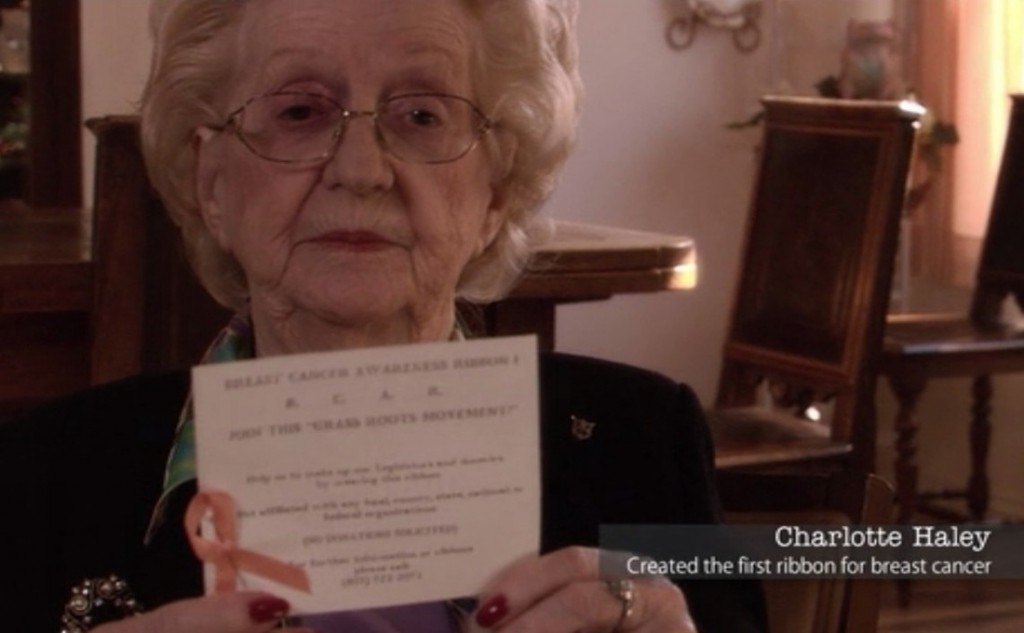
The original “Breast Cancer Awareness Ribbon” (B.C.A.R.) was peach.

It was created by a woman named Charlotte Haley as a grassroots call to action for prevention and greater accountability.

But…Charlotte’s peach ribbon got hijacked. The story is featured in the 2 minute trailer of the documentary Pink Ribbons, Inc.

“If people actually knew what was happening, they would be really pissed off.” – Barbara Brenner, former Breast Cancer Action Executive Director

Read more about Charlotte Haley’s intent of the peach ribbon:

History of the Pink Ribbon

Posted in Research, Resources | Tagged , , , , , | Leave a comment

31 Days of “Little Known” FACTS — For Breast Cancer Awareness Month — Day 6 — Pinkwashing 101

Did you know…

The definition of Pinkwasher:

A company or organization that claims to care about breast cancer by promoting a pink ribbon product, but at the same time produces, manufactures and/or sells products that are linked to the disease.

Breast Cancer Action, coined the term pinkwashing and created a Think Before You Pink® campaign. 

Donna Pinto shares more research and insights about Pink-tober:

Less Pink – More GREEN: An Intelligent and Urgent Makeover for “Breast Cancer Awareness Month”

Posted in Health, Research | Tagged , , , , , , , , , , , , , | Leave a comment

31 Days of “Little Known” FACTS — For Breast Cancer Awareness Month — Day 5 — Lifestyle Medicine

Did you know…

More than 70,000 breast cancer cases a year—40% of all cases—could be prevented with lifestyle measures. – American Institute for Cancer Research

Food is a powerful, yet largely untapped resource for disease prevention.

Many Diseases Are Preventable

Science shows many foods can prevent, halt or even reverse cancer, heart disease, diabetes, obesity, and other life-threatening chronic diseases. Over the past decade, the Angiogenesis Foundation has discovered and gathered evidence that fruits, vegetables, herbs, seafood, tea, coffee, and even chocolate contain natural substances — bioactives — that can prevent and intercept disease by influencing angiogenesis and other defense systems in the body. What we eat and drink is enormously impactful when it comes to preventing disease. – The Angiogenesis Foundation

Can We Eat to Starve Cancer?

Dr. William Li’s TED Talk has been seen by more than 9 million people.

The American Institute for Cancer Research funds and analyzes studies that investigate the links between lifestyle and cancer.

One of their research reviews examined lifestyle changes that could prevent breast cancer. The conclusion: More than 70,000 breast cancer cases a year—40% of all cases—could be prevented with lifestyle measures such as maintaining a healthy weight, breast feeding, eating well, exercising, and limiting alcohol consumption. Dr. Susan Love Research Foundation

Posted in Health, Research, Resources, Sanity | Tagged , , , , , , , | Leave a comment

31 Days of “Little Known” FACTS — For Breast Cancer Awareness Month — Day 4 — Spinning Statistics

Did you know…

Statistics about breast cancer screening can be confusing and misleading.

Women may hear…

“Regular mammograms reduce breast cancer deaths by 20%.”

Sounds pretty good… But how many lives do they really save?

Only 1 in 1,000!

Here is an excellent short video explaining this:

visuel-keepcalm

To receive an email alert with future posts: “FollowDCIS 411

Like” DCIS 411 Facebook page

@dcis411 on Twitter

Posted in Health, Options, Research, Sanity | Tagged , , , | Leave a comment

31 Days of “Little Known” FACTS — For Breast Cancer Awareness Month — Day 3 — $$$ for Metastasis

Today is dedicated to my dear friend Sandie Walters (*see below)

Did you know…

Despite billions raised for awareness and early detection

“There is no actual decrease in the number of women and men dying from breast cancer each year. It’s still holding steady at about 40,000. To put it another way, 110 Americans will die today from metastatic breast cancer. ” – Is the Number of Breast Cancer Deaths Really Dropping?

Facts about Metastatic Breast Cancer from METAvivor, a nonprofit organization focused on metastatic breast cancer research, support, and awareness:

  • The popular breast cancer fundraising movements give on average only 2-5% of their research funds to researching breast cancer metastasis.
  • Instead, their primary focus is on prevention, which does nothing to help those already diagnosed, and early detection, which does not impact those facing the ultimate death sentence of stage 4 breast cancer.
  • 100% of breast cancer deaths occur because of metastasis, and almost 100% of people whose breast cancer has metastasized will die from it.
  • Millions of women and men have died while waiting for research funds to finally be shifted to metastasis research.

In honor of Sandie Walters

Dinner with Sandie and Mark Walters,
Chicago, May 2017

Sandie was a passionate DCIS and breast cancer researcher. She cared so much about helping women make well-informed, well-researched decisions based also on their preferences and values.

Sandie and I met via an online support forum. We developed a friendship and despite living thousands of miles apart, we co-developed DCIS Redefined: Dilemmas, Choices & Integrative Solutions.

Sadly, Sandie died suddenly in January, 2018 after a short bout with pneumonia.

Sandie had an initial diagnosis of low grade DCIS in 2007. Seven years later she had a diagnosis of invasive cancer in the opposite breast. She had a mastectomy and soon after discovered her cancer had metastasized. She became passionate about investigating a more integrative approach to invasive and metastatic breast cancer. We had a lot of talks about the need for better research for the kind of cancer that kills so many despite billions raised for early detection and awareness.

Sandie was a light in the darkness for me and so many other women with DCIS. Her spirit is always with me. I just made a donation to METAvivor in Sandie’s honor. I hope you will consider doing the same in honor or in memory of someone you love.

Watch this video from METAvivor and hear why women want to shift focus and research funding:

Posted in Health, Personal Stories, Research, Resources | Tagged , , , , , , , , | Leave a comment

31 Days of “Little Known” FACTS — For Breast Cancer Awareness Month — Day 2 — Dense Breast Tissue

Did you know…

“Between 30% and 50% of cancers identified in women who undergo screening mammography are not detected by mammography.” – Dr. Christiane Kuhl, University of Aachen, Germany.

Sadly Nancy Cappello’s invasive cancer was missed by mammograms. She founded a nonprofit organization, Are You Dense, to alert women about dense breast tissue masking invasive breast cancers on mammography. Watch this video where she discusses her false negative “Happygram” with Joan Lunden:

Dense breast tissue is one of the strongest predictors of the failure of mammography screening to detect cancer.

Five more facts about dense breast tissue

  • 40% of women have dense breast tissue.
  • Two-thirds of pre-menopausal women and 1/4 of post menopausal women have dense breast tissue. 
  • Mammography misses every other cancer in dense breasts.
  • Breast density is a well-established predictor of breast cancer risk.
  • High breast density is a greater risk factor than having two first degree relatives with breast cancer.

Sources: Are You Dense? ; Are You Dense? Advocacy

Thank you Nancy Capello for your groundbreaking work.

You can read about alternative imaging for women with dense breast tissue here:

Bye-Bye Mammograms: Hello SonoCiné Ultrasound

Posted in Health, Options, Research | Tagged , , , , , , , , , | Leave a comment

31 Days of “Little Known” FACTS — For Breast Cancer Awareness Month — Day 1 — Mammograms

Did you know…

One of the largest studies ever on mammograms indicated they do not reduce cancer deaths.

Listen to this short video with Dr. Joann Elmore, an expert in mammography…

  • “This study adds to an accumulation of data… Multiple large studies.”
  • “We’re not seeing the benefit from mammography that we had hoped.”
  • “The more you look, the more you find.”
  • “We are unfortunately potentially detecting a lot of tumors that the women would have lived with for the rest of their entire lives, and it would have never harmed them, and this is called over-diagnosis.”
  • “We don’t know if she is one of those women that was over-diagnosed and we’re going to over-treat — which can include mastectomies, radiation therapy, chemotherapy.”

Thank you Dr. Joanne Elmore! Facts save breasts and lives!

Posted in Health, Research | Tagged , , , , , , , , , , | 2 Comments

The Importance of Being Informed, Treated with Compassion, and Advocating for Active Surveillance — Nancy Riopel’s Enlightening DCIS Story

“Please, if you take one thing from my experience, consider the importance of being informed and being willing to advocate for the treatment options that you feel are best for you.

I am not DCIS, I am not a ‘tumor’ and I am not just a ‘patient’. I am a mother, a daughter, a sister, and a friend. I am not only a physical being, but the sum of my knowledge and experience, and both an emotional and spiritual being.”

Please click this link below for Nancy’s four part story originally published by Breast Cancer Action, Quebec.

Thank you Nancy for sharing your very personal journey. You are an inspiration!

Posted in Health, Options, Personal Stories, Sanity, Support | Tagged , , , , , , , , , | 3 Comments

Women’s Wellness Retreat

This retreat is funded in part by donations to DCIS 411 and give wellness. Thank you to all who have supported and continue to support these nonprofit projects.

Plant-based food and wellness activities are complementary to all retreat guests. See agenda above by clicking on it. Sample plant-based food recipes are here.

Retreat will take place at my new home in San Diego (see photo of backyard below).

Please email me for information about accommodation and other details:

Email Donna: dp4peace@yahoo.com

Subject line: Wellness Retreat

~ Namaste ~

Donna Pinto

Founder of DCIS 411 and give wellness

A reporter recently asked me: “What kind of response have you had from other women?

My reply: ††

The greatest response over the last nine years has been the many wonderful women I have helped and have developed deep friendships with.

These women have become like family to me.”

Posted in Health | 8 Comments