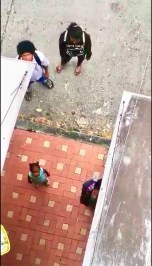
Covid-19 is especially hard on Venezuelan immigrants — many who have walked to Colombia and are now living on the streets. They are literally starving.
Due to a mandatory curfew, a group of caring Colombians are now offering sandwiches and snacks made with love delivered via a “food elevator” from their apartment balcony.
The technique was borrowed from Jimmy Kimmel.
Food banks like we have in the US are presently nonexistent in Colombia.
Any amount of money is appreciated for supplies to keep The Food Elevator going.
To donate:
VenMo: @CenterForHealthEvolution
If you prefer to send a check or have questions, please email donna@dcis411.com
Subject line: Food Elevator
Muchas gracias!!! Any amount is truly appreciated!
Translation of sign:
“Good Colombians: Thank you for helping us. We are Venezuelans. We don’t mean any harm. We are just hungry. Thank you for your help.”
“Be a lamp, or a lifeboat, or a ladder. Help someone’s soul heal. Walk out of your house like a shepherd.” ― Rumi
In 2010, I was diagnosed with DCIS and my friend Adriana helped me in a priceless way. She counseled me away from FEAR and guided me in practical ways towards peace, love, and abundant health.
Over the years, countless people have benefited from Adriana’s love, generosity and wisdom.
Now Adriana is giving us an opportunity to join her in a humanitarian effort focused on supporting women business owners from her hometown in Colombia. These women are the breadwinners in their families and now they have had to shut down their small business overnight due to COVID-19.
One day that these women do not work is a day that they can not feed their family.
Groceries + Love = Global Healing
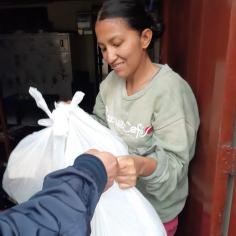
With the help of Adriana’s family, $1,000 of groceries and personal hygiene items have already been hand-delivered to 30 families in dire need in Colombia.
This effort was was made possible with love and donations made in memory of “Mama Katy” by Adriana and Katy’s son Rustom.
Please watch short video (below) of recipients saying “Gracias.”
Would you please consider joining this humanitarian effort?
$50 will feed and support one family for 2 weeks.
Any amount is truly appreciated.
With your generous donation, 100% of the money goes immediately to purchase and hand-deliver food and essential living supplies to families in need.
The first 20 donors of $50or more will receive a special gift made by Adriana
Extra potent advanced hand sanitizer
Cash donations appreciated via VenMo: @CenterForHealthEvolution
Please include your mailing address
If you prefer to send a check or have questions, please email donna@dcis411.com Subject line: Groceries + Love
On January 19, 2010, I was diagnosed with DCIS. I was 44 and had two young children.
Hearing the word “carcinoma” was terrifying. Hearing the aggressive treatments was equally terrifying — and nothing made any sense to me.
Despite being heavily pressured by a medical team of oncologists and surgeons, my gut led me to investigate. I soon felt confident to say NO to aggressive “cancer” treatments.
With the guidance of a nutritionist friend, I focused on learning about “food as medicine.”
I went from being frightened, confused and anxious to feeling calm, empowered and inspired. I became an avid researcher, blogger, Certified Nutritionist and advocate for informed decision-making and pro-active wellness practices.
I created DCIS 411 in 2011 to share my discoveries and resources. I love helping women find peace of mind and optimal health after a DCIS diagnosis.
In 2015, I created Give Wellness to share wellness information and nutritious recipes. Below you will find links to some of my favorite recipes and resources.
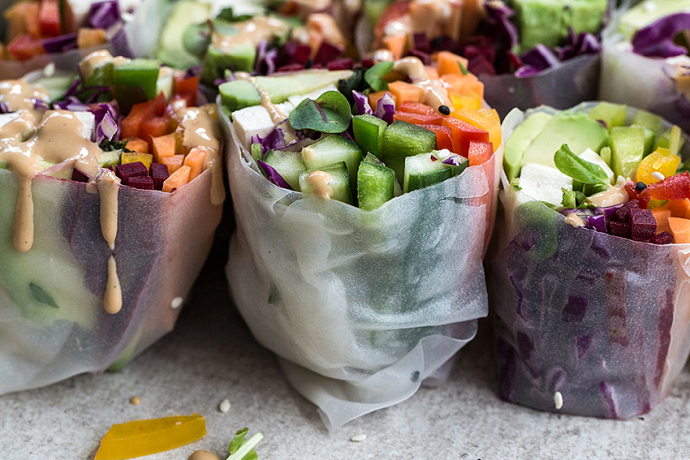
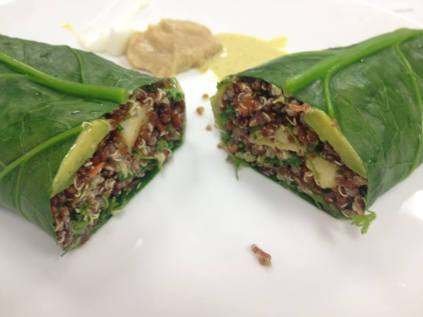
Favorite green collard wrap with quinoa, hummus & avo
Patients, researchers, advocates, journalists and organizations need to work together to understand and communicate better about this serious women’s health issue!
Our team at the Sydney School of Public Health, Australia, is carrying out a research study to explore women’s awareness of the term ‘overdiagnosis’.
We are interested in talking with women anywhere in the world who:
Have been diagnosed with breast cancer, following breast screening
Had no breast symptoms at the time of diagnosis
Received the diagnosis at least 6 months ago, and were 40+ years at the time
Were aware, or later became aware, of the possibility of screen-detected overdiagnosis, and have considered that possibility in relation to their own breast cancer.
If this describes you, and you would consider being interviewed, please read more about the study here: Participant Information Statement and contact us: EXPRESSION OF INTEREST FORM. If you agree to be interviewed, a researcher will interview you during one 30-45 minute interview by telephone or Skype.
Please do not hesitate to contact us directly if you have questions about this study, at alexandra.barratt@sydney.edu.au or via phone +61 2 9351 5103. Thank you very much for your time and help.
Recording consultations with physicians is extremely valuable, especially with regards to obtaining results of screening or diagnostic tests, biopsies, surgeries, or discussions about future cancer risks, or potential treatments.
Recording the consultation enables:
ability to glean important information missed or not comprehended due to information overload, shock, language or hearing issues, etc.
ability to share with loved ones who may not be able to attend the consultation
improvement in patient recall and understanding of condition, risks, treatments
Learn how to use your phone’s “Voice Memo” app and practice
Breast Cancer Decision Services at UCSF is an exemplary program. I experienced first-hand how valuable their services were when I went there for a 2nd opinion with Dr. Laura Esserman in 2012. A PhD student contacted me to discuss my list of questions ahead of my scheduled appointment. She attended the consultation with me, recorded it, and took notes. After the visit, she sent me a summary of her notes and the recording of the visit.
I have listened back to recordings of several physician consultations and found myself hearing and learning new things that I may have missed at the time of the appointment. I did have one physician (a medical oncologist) who was not agreeable to recording the consultation. I wondered why and did not continue to see this physician.
In 2015, I listened back to a recording from my phone consultation with expert pathologist Dr. Michael Lagios who I consulted with for a 2nd pathology opinion in 2011. I thought it was an amazing amount of information that could really help women if they could listen to my questions and his answers. He kindly granted permission for me to share the 43 minute recording on DCIS 411:
“Health care overall is moving toward greater transparency and patient recordings are going to become more common. That means there would be tremendous benefit to patient advocacy groups, health care organizations, providers and policymakers working together to develop clear guidelines and policies around the responsible, positive use of open recordings.”
“39 of 50 states as well as the District of Columbia are single-party jurisdictions—where only one party needs to consent. In other words, in these jurisdictions, if somebody wants to record another person—including a clinical encounter—it’s legal.
There are 11 all-party-jurisdiction states in which both the
clinician and patient must both consent to recording a conversation:
California, California, Florida, Illinois, Maryland, Massachusetts,
Michigan, Montana, New Hampshire, Oregon, Pennsylvania, and Washington.
In these states, it’s a felony for a patient to record a physician
without permission.
In single-party jurisdictions—or most of the United States—if a
patient asks to record a clinical encounter and the clinician refuses,
the patient can proceed to record the encounter anyway. The clinician
must then choose to continue or terminate the encounter.
In all-party jurisdictions, the clinician must be asked by the patient to record the clinical encounter. Any illegal recording can then be reported by the clinician to the authorities. Possible repercussions include compensation for harm, attorney’s fees, and other costs, with disseminating the recording via the Internet being considered an additional violation.”
Gigerenzer states: “Information about the actual benefits and harms of screening has been held back for years. Pink ribbons and teddy bears, rather than hard facts, dominate the discourse.
Why is that? It’s not because the information is hazy. No other cancer screening has been studied so extensively. The fact box below outlines benefits and harms. It is based on half a million women in North America and Europe who participated in randomized clinical trials, half of whom attended screening and half of whom did not. The fact box shows what happened to them 10 years later:
Trick #1: State that screening reduces breast cancer mortality by 20% or more, because it sounds more impressive than explaining that the absolute risk reduction is 1 in 1,000.
This trick has been used for years in pamphlets. You might think, well, it’s not much, but at least one life is saved. But even that is not true. The number of deaths from all cancers, breast cancer included, is the same in both groups, as seen in line two of the fact box. And that leads us to trick #2:
Trick #2: Don’t mention that mammography screening doesn’t reduce the chance of dying from cancer. Talk only about the reduction in dying from breast cancer.
Often, and particularly if a person had multiple cancers, the exact cause of death is unclear. For this reason, total cancer mortality is the more reliable information when you look at it in terms of the larger goal: saving lives. In plain words, there is no evidence to date that routine mammography screening saves lives.
Now let’s look at the harms.
Trick #3: Don’t tell women about unnecessary surgery, biopsies and other harms from overtreatment. If you are asked, play these down.
The first way a mammogram can harm women is if it
comes back with a false positive, leading to invasive and unnecessary
biopsies. This isn’t the rare fluke most people seem to think it is.
This happens to about a hundred out of every thousand women who
participated in screening. Legions of women have suffered from this
procedure and the related anxieties. After false alarms, many worried
for months, developing sleeping problems and affecting relationships
with family and friends.
Second, not all breast cancers are life-threatening. Women who have a nonprogressive or slowly growing form that they would never have noticed during their lifetime often undergo lumpectomy, mastectomy, toxic chemotherapy or other interventions that have no benefit for them and that are often accompanied with damaging side-effects. This happened to about five women out of a thousand who participated in screening.
There’s one final trick I would like to share with you.
Trick #4: Tell women about increased survival. For instance, “If you participate in screening and breast cancer is detected, your survival rate is 98%.” Don’t mention mortality.
Susan G. Komen uses this trick, as do many health brochures. How can 1 in 1,000 be the same as 98%? Good question. Five-year survival rates are measured from the time that cancer is diagnosed. What this means is that early diagnoses only seem to increase the rate of survival; it doesn’t mean that 98% were cured, or even lived longer than they would have without an early diagnosis from a mammogram. What’s more, screening also detects nonprogressive cancers, which further inflate short-term survival rates without having any effect on longevity. For those reasons, survival rates are often criticized as misleading when it comes to the benefits of screening. What you really need to know is the mortality rate. Again, look at the fact box, which uses neither 5-year-survival rates nor other misleading statistics such as relative risk reductions.
Thanks to these tricks, quite a few doctors (perhaps yours?) are inadequately informed as well. But again, why is the misinformation so widely spread? Like those who refused to peer through Galileo’s telescope for fear of what they would see, many who have financial or personal stakes in screening and cancer treatment—from medical businesses to patient advocacy groups sponsored by the industry—close their eyes to the scientific evidence and cling to a one-sided view.
Mass screening is not the key to saving lives from cancer; the effective means are better therapy and healthier lifestyles. About half of all cancers in the U.S. are due to behavior: 20-30% to smoking; 10-20% to obesity and its causes, such as lack of exercise; and about 10% and 3% to alcohol in men and women, respectively. With respect to breast cancer, less alcohol and a less sedentary lifestyle with more physical activity, such as 30 minutes of walking a day, can help.
Until five years ago, cancer screening brochures from organizations in Germany (where I live) used all four of the above tricks to advocate screening. That is no longer so. All misleading statistics have been axed, and for the first time harms are explained, including how often they occur. However, none of the organizations have yet dared to publish a fact box, which would make the evidence crystal clear to everyone. Then, every woman could finally make an informed decision on her own.”
Thank you Gerd Gigerenzer for explaining all the TRICKS –and shining a light on the TRUTH.
#BeW I S E is a woman’s health initiative with an urgent public health mission — to ensure all women are properly informed about serious potential harms of breast cancer screening.
Women diagnosed with DCIS, also known as “stage ZERO” breast cancer, are often rushed into extremely aggressive treatments (surgery, radiation and drugs) that actually have no survival benefit… yet this information is often not told to them.
Instead women are given confusing “risk reduction” statistics with each of the “standard of care” treatments. Emphasis is purely on decreasing a woman’s risk of a future DCIS or invasive cancer. The percentages used are often misleading as the #s may be relative risk #s rather than absolute #s.
In addition, side effects of all the treatments are downplayed.
Dear Healthcare Providers:
Women deserve to be fully informed about all potential side effects of each treatment as well as the survival benefit for each treatment.
“Radiation for DCIS is prophylactic; it reduces the risk of invasive recurrence, the only lethal form of breast cancer, while increasing the probability of eventual mastectomy. The absolute magnitude of both effects is modest, such that personal patient preferences should drive decision-making. – Radiation therapy for ductal carcinoma in situ: A decision analysis
While tamoxifen after local excision for DCIS (with or without adjuvant radiotherapy) reduced the risk of recurrent DCIS (in the ipsi- and contralateral breast), it did not reduce the risk of overall mortality. – Postoperative tamoxifen for ductal carcinoma in situ.
Warrick and Allred in their editorial piece conclude that tamoxifen is probably overused, and advocate more selective use. They particularly note that the major benefit would be seen in patients who are younger (premenopausal) with extensive high grade disease and/or narrow margins, and clearly only those that are ER positive. In conclusion, the clinical benefit of tamoxifen intervention based on the randomized trials is meager at best. There appears to be no benefit, at least in the UK/ANZ trial for tamoxifen amongst irradiated patients, and the benefits when claimed are very small. – Tamoxifen as an Adjuvant Agent for Ductal Carcinoma In Situ (DCIS)
Over 400 breast-implant recipients have developed a rare blood cancer called anaplastic large cell lymphoma (ALCL) and a dozen women have died.
Allergan, based in Dublin, Ireland, said it has agreed to remove its Biocell textured implants from the market after the FDA asked for their recall.
“Breast implants often require repeat surgeries and they should not be considered lifelong devices. About 1 in 5 women who get implants for cosmetic reasons need to have them removed within 8 to 10 years, according to the FDA. Yet woman are not fully informed.”
With mastectomies and double mastectomies on the rise, are women fully informed? One woman is working hard to make sure…
“These textured implants are used more often with reconstruction than cosmetic surgery” – Dr. Jen Ashton, Good Morning America:

 Covid-19 is especially hard on Venezuelan immigrants — many who have walked to Colombia and are now living on the streets. They are literally starving.
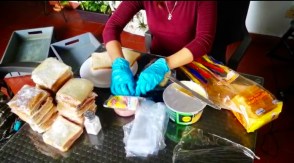 Food banks like we have in the US are presently nonexistent in Colombia.
 Any amount of money is appreciated for supplies to keep The Food Elevator going.
 Translation of sign:
 “The Food Elevator” is led by Adriana’s niece Laura. It is a sister project of Groceries + Love = Global Healing
The Food Elevator and Groceries + Love = Global Healing are humanitarian projects in loving memory of Katy Guard.

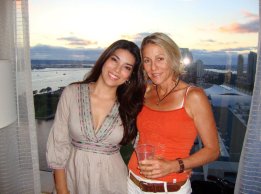
















 DCIS 411